The other side of someone’s learning curve
Why everyone in your startup feels incompetent at the same time
Early in my first Head of People role, a grad hire asked for some of my time.
She was brilliant. A barrel. Hungry, bold, obsessed with feedback, she made everyone around her better. She was the type of team member we’d build responsibilities around, because we knew she’d keep outgrowing them.
And she came to me because she had an issue with her manager.
He had just been promoted, and hadn’t actually been at the company for that long. He’d come in a couple of levels higher than her. She felt he didn’t know what she already knew. He was doing things she could be doing (but obviously not as well as she would!), and he was essentially blocking her. She wanted to grow at the speed she was capable of, and to do that, she needed a manager she could actually learn from. What she had instead, she said, was a manager she was having to manage.
I probably don’t need to tell you that she was very frustrated. I understood why, but I saw it differently than she did.
So I said something which I’ve said since to people sitting across from me with a version of the same frustration:
You’re on the other side of his learning curve.
There is usually a short pause when I say it. A sort of oh. She was experiencing, daily, the cost of someone else’s growth.
I reflected on that conversation for weeks afterwards, because I couldn’t help seeing it everywhere else. She wasn’t the only person on the team managing their manager, or the only person navigating a scrappy process designed by someone doing it for the first time (hey! What does it actually take to get promoted here?!). I came to a conclusion that’s held up across every startup I’ve worked with since:
In a startup, almost everyone is on the other side of someone’s learning curve, almost all of the time.
It’s this, more than the pace, ambiguity, or workload, that makes being part of a startup such a wild ride.
Startups run on people learning in public
Startups love a learning curve. The whole premise itself is stretch. You hire people as much for potential as you do experience, then you promote from within because the person who built it all understands the context and history vs. someone new who would take six months to learn it. Six months of getting up to speed is a luxury we do not have in startup land. We give people work that is beyond them, because the work can’t wait for them to be ready.
This is good. It’s one of the best things about working in a startup. There are very few environments in your career where you’ll be handed work that outsizes you on a weekly basis, be trusted to figure it out, and then be handed the next thing before you’ve mastered the last.
But every learning curve has two sides.
There’s the side that the learner is on (takes effort, feels uncomfortable, is occasionally exhilarating). And then there’s the side everyone around them is on (co workers, direct reports, founders, customers). The cost of absorbing that learning often goes unnamed.
We often think of learning curves as a solo experience, a journey someone is on.
But in fact, every learning curve has an audience, and there is often a price to pay.
The first time manager’s learning curve
I’ve only worked in one (failed) startup where the management layer wasn’t green, green, green.
Usually, we promote our most brilliant individual contributors into management roles. These are the people who are exceptional at what they do (even if sometimes rough around the edges) - they built something from the ground up, or they ship at incredible speed, or they just have so much contextual knowledge. As the team grows, they are the obvious people to lead it. Not least because they would leave if they weren’t given the next opportunity.
But as we know, ‘management’ is not a natural continuation of being brilliant at your craft. It’s a completely different skillset, and has its own very steep learning curve. I’ve partnered with hundreds of first time managers across early stage companies, and I have never met one - not one - who wasn’t on the most uncomfortable curve of their career. Humans are so complicated. You can’t just take your preferred way of working and assume it will work for even one other person. Every single person has different histories, motivations, and communication styles.
So when you promote a brilliant IC into a manager role you might start seeing feedback that’s either too sharp, or completely absent. You may see performance issues get avoided for weeks, then all of a sudden turn into everyone’s entire personality for a month because you’re now having to resolve a bit of a shit show (ask me how I know). Occasionally you’ll hear complaints from their team that goals are unclear and constantly shifting. Your newly promoted manager was supposed to be a player coach, but they’re mostly still a player, because they haven’t been taught yet how to do the coaching part.
The hardest thing for the team underneath this manager is that they usually can’t share exactly how they are feeling. They have to self censor a bit. Their manager is crucial. They are valued, respected, a core part of the team. So, how would you even tell the founder that the person who they are completely loyal to is the very reason you’re thinking about leaving?
So instead, the team must absorb it. They coach themselves through it and start managing up.
None of this makes this new manager an inherently bad one. They are simply at the launch point of a steep learning curve. In twelve months, with the right support, they may become a great one. But their team is paying for those twelve months here and now.
The founder’s learning curve
The same thing happens with founders.
A founder can be exceptional leading ten people. Maybe they have a really sharp product instinct, and they probably have a personal relationship with every hire. Culture runs on proximity, intensity and a shared conviction. At ten, the job might match them perfectly where they find themselves at the top of their curve, unbeatable at what the company needs.
Then, they grow. Twenty five, thirty, forty people. And all at once, the job changes.
The skill required now is delegation, not product instinct. They need to communicate through layers instead of directly. They need to build systems they’ve never had to build because until now, they were the system. They need to resist the pull to jump into the work they’re best at, even though it’s there needing to be done, and they could do it faster.
They are now at the bottom of a new curve - people leadership at scale. Their job title hasn’t changed, they are still the CEO. The team expects the same person who built the company to also know how to scale the company. There is no course for this, they haven’t been promoted into it. They just wake up one day with a job role they’ve never done before and yet everyone on their team assumes they already know how.
The team feels this even if they can’t articulate it. Decisions get made, revisited, made again. Priorities shift and things that used to feel clear start to feel murky. And the founder is often the last to see it, because in their mind, the company is getting harder to run.
The curve is here, and the whole company is on the other side of it.
The S curve of learning, as a lens
The best mental model I’ve found for this is Whitney Johnson’s S Curve of Learning.1 It works because it’s simple, and a great diagnostic tool. There are three points to the S curve: at the launch point everything is new, progress is slow, and you feel incompetent, because, objectively, you are. Then comes the sweet spot, where the work starts to click and growth compounds. At the top is mastery: things start to feel easy, but the learning slows again.
Most people use the S curve to think about themselves. In startups, the more useful question is who is on the other side of my curve?
Because where someone sits on their curve doesn’t just affect them. It shapes the experiences of the people around them. And in a startup, where learning curves stack at speed, this is an organisational story, not a personal one.
I want you to see clearly that the impact of learning curves is not equal, so let’s map your organisation. Draw three S curves on a piece of paper, stacked vertically. Label them
Individual. Where is any person on their current curve? Launch, sweet spot, or mastery?
Team. What curve is each team collectively on?
Organisation. Where is the company on its scaling curve, and which functions are shaping the conditions everyone else works inside?
Now mark where each person, team, and the organisation sits today.
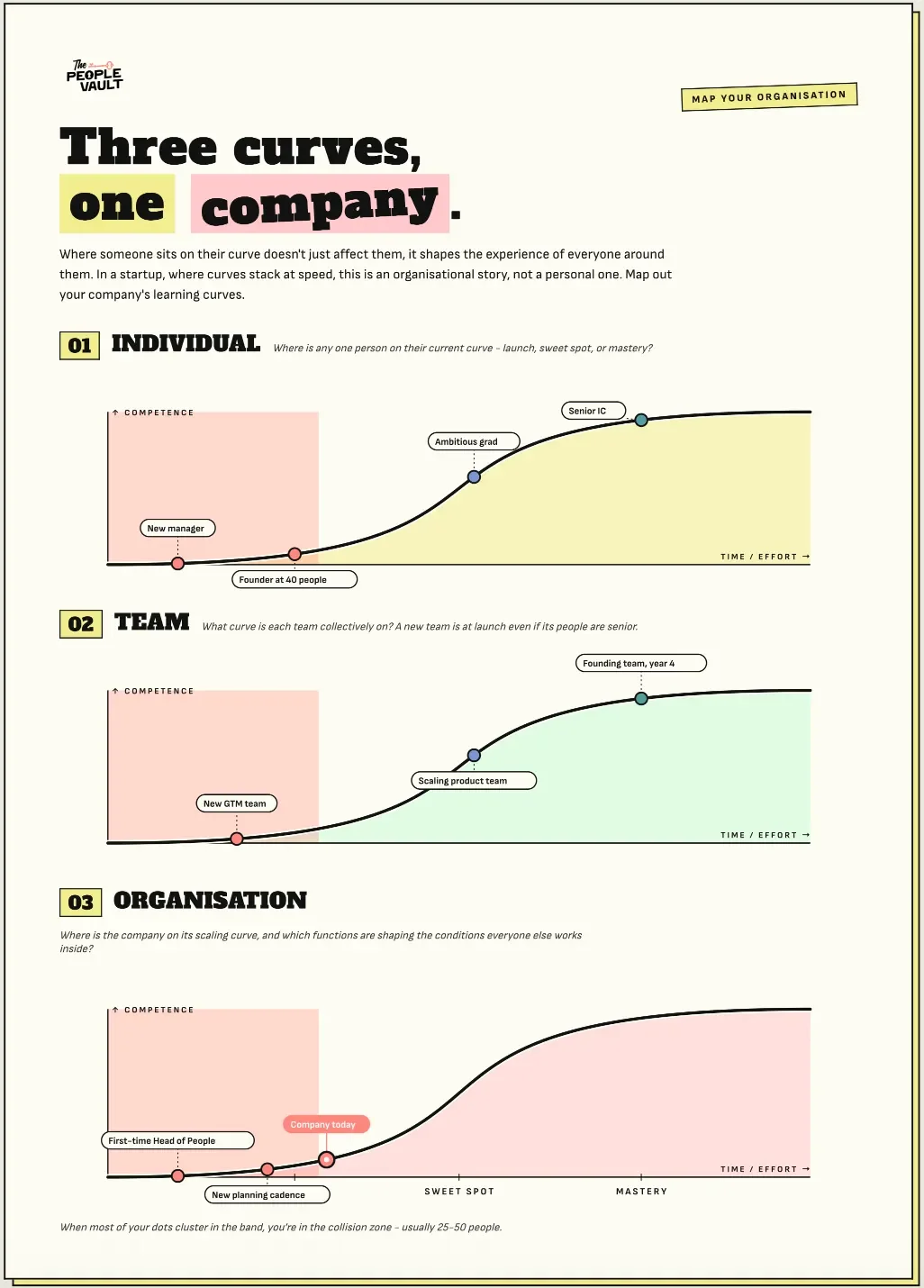
Figure 1: Adapted from Whitney Johnson’s S-Curve of Learning
You’ll start to see things you’ve been feeling but couldn’t explain. A manager at the launch point of their management curve, leading a team at the launch point of a new function, inside a company at the bottom of a scaling curve - a collision of three curves, and nobody in it feels particularly competent, because collectively they aren’t yet.
The S curve becomes a map of the emotional experience of your company.
To be clear, learning curves are not the problem. They are actually the point. Startups work because they put people into stretch roles before they feel ready. Sometimes the right person is the one who hasn’t done it before - I’ve seen countless senior hires arrive in early stage companies and reach instinctively for frameworks built for businesses ten times the size. It very rarely works.
I’m not arguing for people who are further along on their learning curves. I’m pointing out that some curves are much more expensive than others, and most founders do not think hard enough about which costs they are asking the company to carry.
Some curves become infrastructure
A horrible 1:1 from a first time manager is recoverable. As is a few months of a founder stumbling through a patch of unclear communication. Teams can weather that, where there’s trust. Individual learning curves have a cost, but it usually stays local. It lands on the people closest to the learner, and with the right support, it passes.
But not every learning curve stays local. Some roles shape the system everyone else works inside. When someone is learning in one of those roles, their curve becomes part of the company’s infrastructure, and the cost compounds in ways they often can’t see.
The clearest example I have is from my own function, but it’s not unique to People. Any load bearing role can become an organisational learning curve if it has the influence to shape how and why work is carried out.
I’ve seen this happen more times than I’d like. I was on this curve in my first People Lead role.
It’s not always the case, but usually when you’re bringing in this function, you’re scaling, so you likely have hiring needs. It’s for this reason that the first ‘people’ role is often a talent one, with the person spiking in recruiting experience. They are very good at this job, they do a bunch of people-adjacent work alongside the talent. They have the ear of the founder and they grow with the company. When it’s time to hire “someone senior for People” the founder looks at who’s already here and makes the obvious call. Why wouldn’t they? This person knows the company, has helped scale the culture, and has the trust of the founder.
There is nothing inherently wrong with this path. But talent and people are genuinely different skillsets. Recruiting is, at its heart, about finding and closing the right people. Good People work is systems design for humans.
Now you have someone at the bottom of a new curve making load bearing decisions about pay, progression, performance, promotion, and everything in between. These are not decisions that get revisited every quarter. Managers use them to make promotion calls, candidates evaluate offers against them. People build three years of their career inside them. Over time, the systems don’t work in the way you intended, and by the time you realise the framework was designed by someone figuring it out for the first time, it’s already embedded.
In People, this is what an infrastructure curve looks like. It doesn’t go away when the person who lived that learning curve eventually moves on. It doesn’t even go away when they level up and realise what they’d have done differently. The framework is still there. The comp band logic is still there. Who has and hasn’t been promoted is still there. These decisions shape who joins, who thrives, and often play a role in who leaves.
The same thing happens anywhere a role shapes the operating system of the company. A first time finance leader might build the budget process everyone now works around, or a first time operator might design the rituals, reporting lines, and decision forums that become “how we work here.”
This is how learning curves become organisational ghosts.
The collision at 25-50 people, did everyone lose their mind?
The 25-50 person stage of a startup feels like everyone lost their mind at the same time because, at this stage, every curve stacks at once.
The founder is at the bottom of a people leadership at scale curve. The early hire who used to be brilliant at their craft is struggling as they take on more and more. The first time Head of People is designing the architecture everyone is going to pin their hopes and dreams on. The first time managers, and there’s usually upwards of five of them, are all learning to manage at the same time, in their own style (because there’s no codified manager standards), which means most of the direct reports in the company have a manager who has never done this before. And somewhere, inside all of this, an ambitious grad hire is sitting across from someone like me saying: I just want a manager I can actually learn from.
Nobody feels competent, not really. The founder is frustrated that they’ve hired more people, and it feels like less is getting done. The early hire feels overlooked. The new managers are struggling. The ICs think the company has lost its way. Everyone has a theory on who is to blame.
Except nothing has actually gone wrong.
This is what scaling looks like. A collision of learning curves, at different altitudes, all steep, all at once. The pain of it comes from the fact that nobody sees it.
If you mapped your whole organisation on S curves, at individual, team, and organisational level, you would see it. It becomes clearer what the people around each person are actually experiencing.
Your culture is not broken, it’s just finding its way through all these curves.
Once you can see it
The point isn’t to stop putting people at the bottom of their curve into important roles. You can’t avoid this, and you shouldn’t want to. These people know your company, care about it, and have earned their seat. The curve is the cost of that trust.
The point is seeing it.
Most of the resentment I see in teams isn’t about the curve itself, it’s when they feel like their founder doesn’t see how little this person knows. People can usually tolerate someone learning, what they struggle with is being asked to pay for it while everyone else pretends everything is fine.
That’s when the curve gets expensive. The people absorbing it rarely complain. They just get tired. They start to manage around the person, and will stop taking certain problems to them. They become slightly less honest. Eventually, they start interviewing elsewhere, and you only find out in the exit interview what finally tipped them over.
Once you see the curve, you can manage what it costs. The first thing is usually getting clearer about which curves are worth investing in, and which roles you can’t afford to have someone figuring out from scratch. After that it’s a mix: coaching, mentoring, sharper role design, clearer manager standards. Sometimes it’s bringing in someone who’s already been on the next version of this curve. You can also be honest with the team that someone is still growing into the role, instead of pretending they’re already brilliant at every part of it.
The hardest curve to see is your own.
There’s lots of research showing we consistently overestimate our own performance2, and we overestimate it most when we’re newest at something. The people at the bottom of the curve are often least able to see they’re on one.
This includes founders.
Which means the lens I’ve shared is genuinely useful for mapping everyone around you, and often very hard to apply to yourself. Seeing your team’s curves is actually relatively easy. Seeing your own usually takes someone else.
Being that “someone else” is a lot of what I do as a partner to founders who are trying to understand the curves of their organisation: their own, their co-founder’s, the manager everyone loves but who is surviving, not thriving, the brilliant IC who is BOUGHT IN but completely misdirecting their energy.
In the early stages, the founder is the system. The company works through proximity - everyone being close enough to the founder to understand what matters, how decisions get made, and what good looks like.
But proximity stops scaling earlier than most people expect. It becomes very obvious at 25-50, but the shift usually starts around fifteen, when the team begins to need ways of working that don’t depend on the founder being in every conversation.
This is where my work often starts. Sometimes I’m working with founders early enough to design intentionally: which curves to invest in, what support people need, which systems are worth building now, which can wait, and where the founder needs to stop being the glue. Other times, I come in later and we are unpicking the downstream consequences of curves that nobody designed around.
Either way, we work out where the curves are, which need support, and which are too costly to ignore. Then we design around them: clearer roles, stronger manager expectations, cleaner decision making, better support for people in stretch roles, and people systems that are contextual to the company rather than imported from somewhere else.
The work is not to remove the stretch (we LOVE the stretch!). It’s to make it achievable, and survivable, so the bets we make on people actually pay off.
And really, isn’t that the startup dream?